What Next if Salva Kiir Remains Obstinate in the Face of UN Sanctions?
By Gwado Joseph Ador
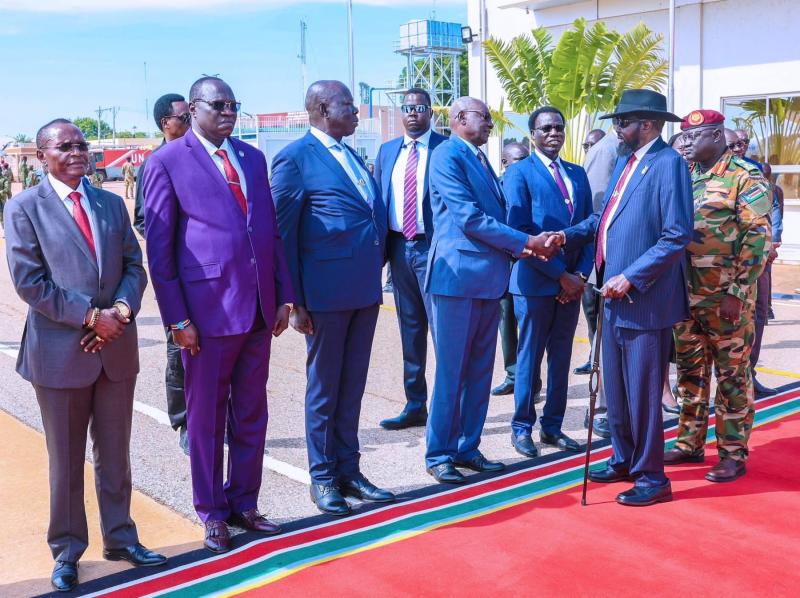
The United Nations Security Council has recently extended its sanctions on South Sudan for another year — maintaining the arms embargo, freezing assets, and upholding travel bans on key individuals. This decision caught President Salva Kiir Mayardit and his inner circle completely off guard. They immediately dismissed the move as “unfair,” but the world sees something different.
The truth is that the worsening political and humanitarian crisis in South Sudan — and the President’s relentless struggle to cling to power and wealth — is what triggered this renewed international pressure. The sanctions are not random. They are a direct response to the government’s continued failure to implement peace, protect civilians, and govern responsibly.
For years, the African Union, neighbouring states, human rights organizations, and civil society leaders have pleaded with President Kiir to change course. They have urged him to stop the targeted marginalization of communities in Upper Nile, to end political repression, and to release his deputy, Dr. Riek Machar, who remains under effective house arrest. Without Machar’s freedom, the remaining provisions of the Revitalized Peace Agreement cannot be implemented.
The President has also been repeatedly advised to confront the cancer of corruption, which has drained the nation’s wealth into private pockets while ordinary citizens suffer. He has been asked to address the widespread intercommunal violence that continues to destabilize the country. Yet these appeals have been ignored.
Instead, South Sudan has drifted deeper into authoritarianism. Activists, journalists, and opposition members are monitored, harassed, detained, or disappear without trace. In Upper Nile, the government’s policies have fuelled dangerous tensions between the Collo community and the Dinka Ngok, including the controversial administrative changes that handed Collo ancestral lands — including parts of Malakal — to others. These actions have fractured trust and inflamed old wounds.
South Sudanese across all 64 tribes are now awakening to a painful truth: the crisis is not accidental. It is the result of deliberate political choices. Many citizens increasingly believe that President Kiir himself has become the central obstacle to peace, unity, and national healing.
If he continues to defy the international community, reject reforms, and suppress his own people, the consequences will be severe — not only for him, but for the entire nation. The world is watching. The region is watching. And most importantly, the people of South Sudan are watching.
The question now is simple:
What happens next if Salva Kiir refuses to change?
The answer will determine whether South Sudan moves toward reconciliation and stability — or slides further into isolation, fragmentation, and prolonged suffering.